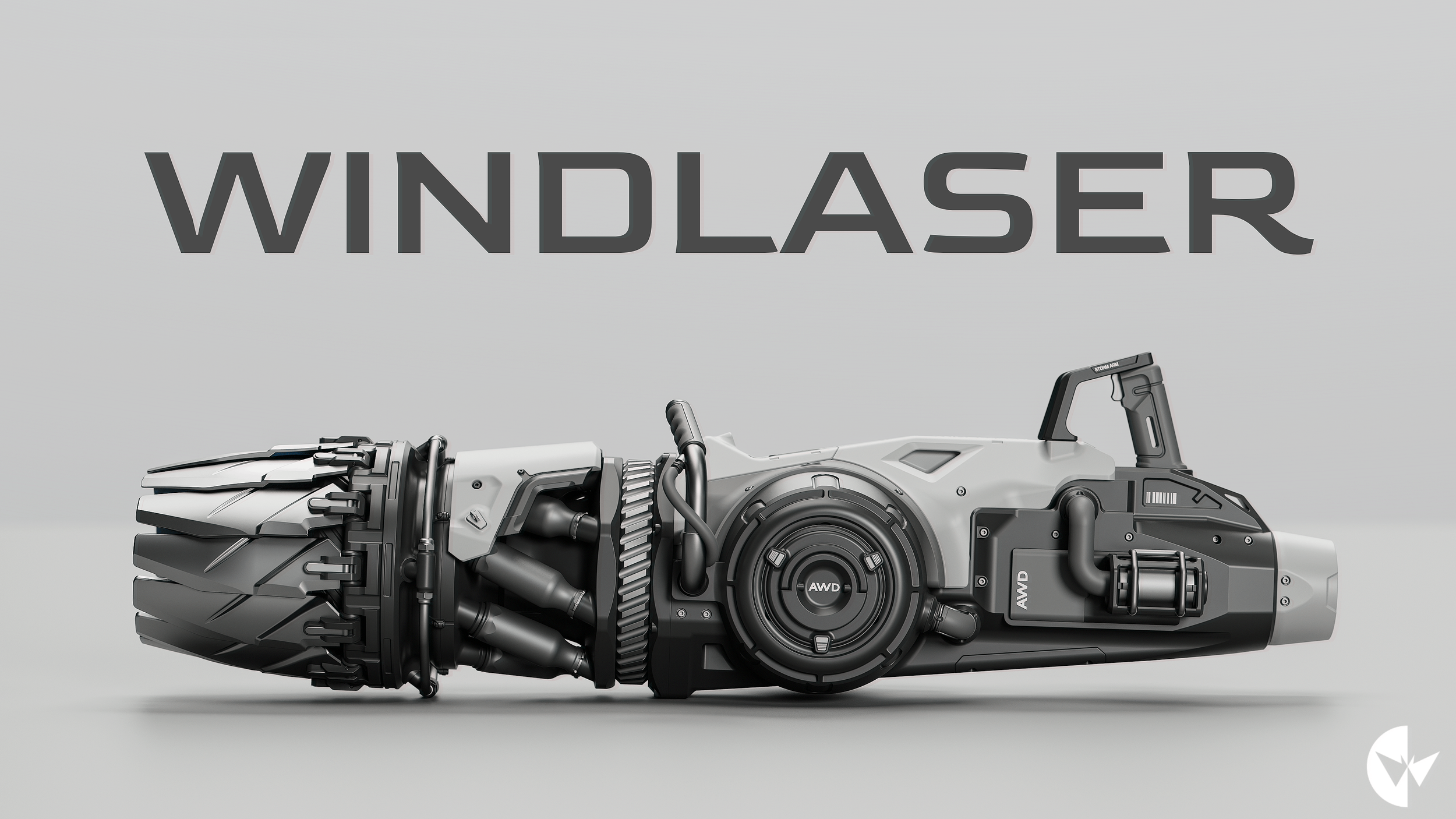
Building the Windlaser - 3D Weapon Modelling
Hey, Andrew here, Senior Weapons Artist at chaotic works.
I’ve been designing the Windlaser, one of the many weather weapons that will be coming to Project S.
What is the Windlaser?
The Windlaser is an experimental weather weapon built to disrupt, displace, and destabilise. It generates controlled bursts of extreme wind force capable of knocking down players and overturning vehicles. The execution is deliberately volatile and is designed to make it feel like the weapon itself is alive - like a beast that cannot be contained.
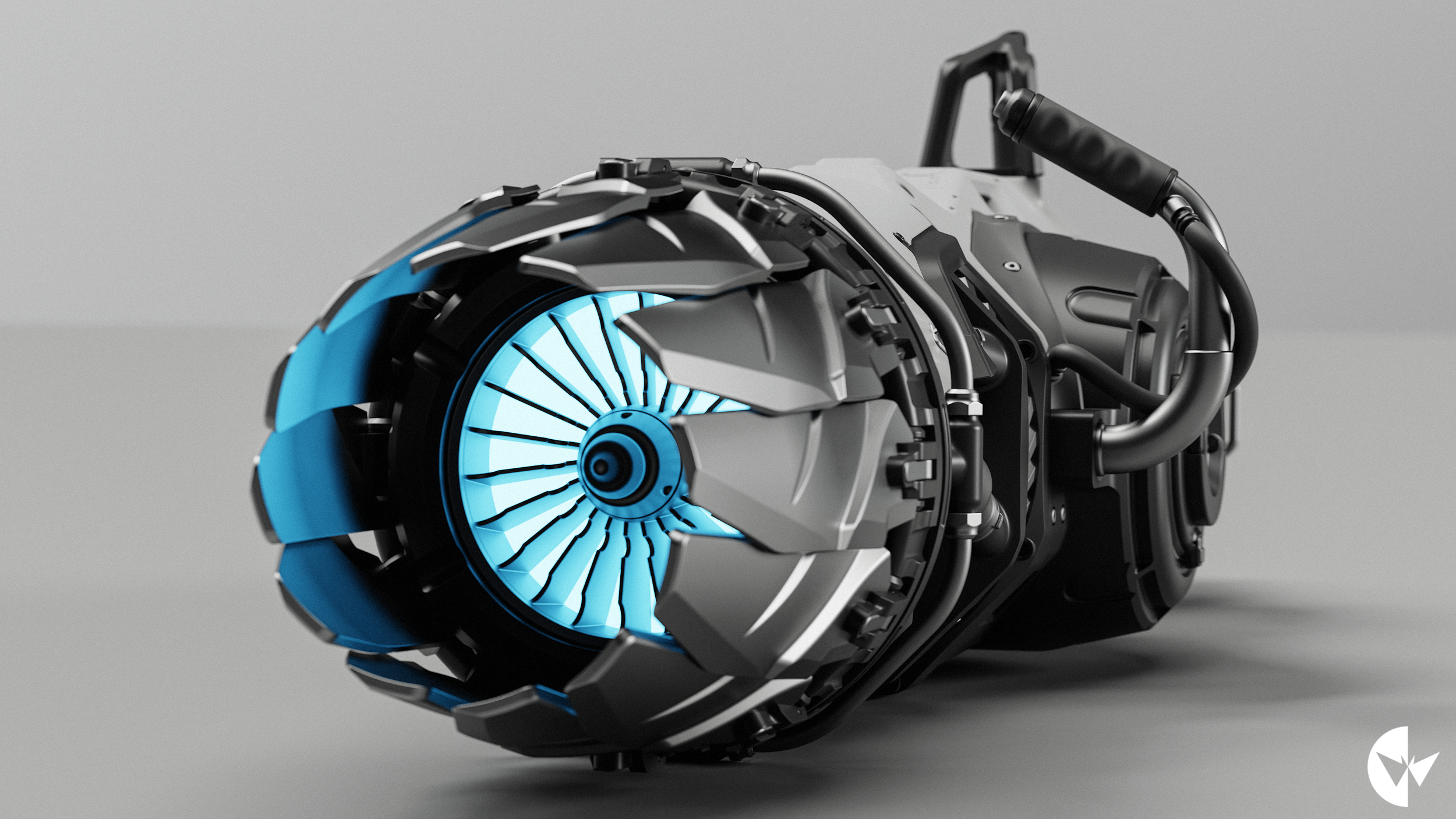
The weapon is designed to feel unstable even before it fires. During charging, the entire structure moves and rotates at various points, creating visible anticipation ahead of each shot. This motion is not cosmetic. It tells the player that it's not a passive tool but something that will cause some serious damage, either to the player themselves, or anything else in its path!
Use cases and specification
The intention was to create something that appears semi-autonomous, closer to a machine with attitude than a static object. It looks difficult to control, and that perception aligns with how it performs.
The Windlaser releases a directional wind blast as its primary function. At full charge, the force is enough to launch targets over significant distances. This applies to both players and vehicles, making it effective for crowd control, disruption, and environmental manipulation. Charge level directly affects output, so the level of timing that a player needs in order to use it requires a fair amount of precision (and positioning - firing this thing in a light vehicle might not end too well for anyone involved).
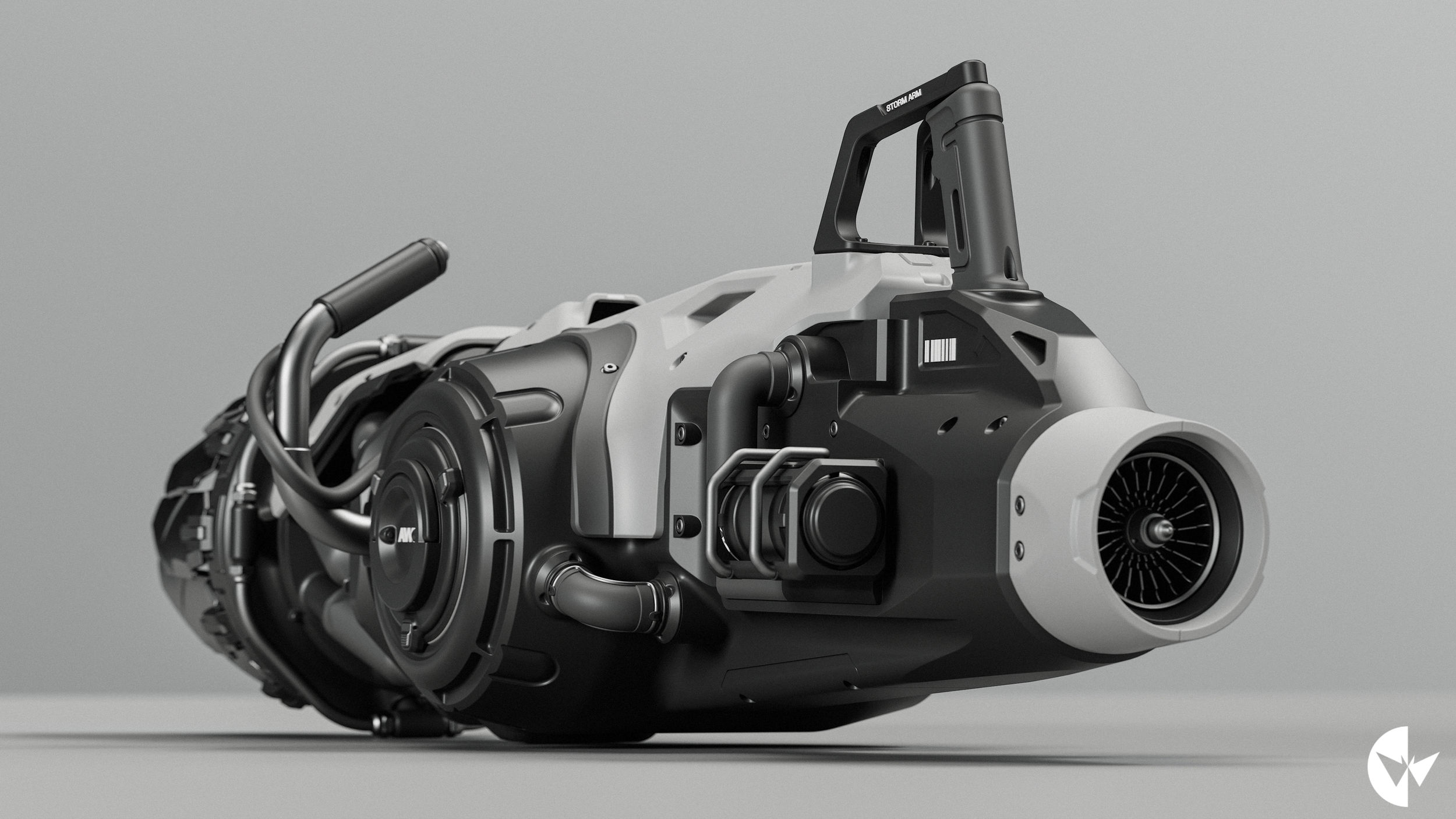
Speaking of positioning, there is also a secondary consideration for the player to take into account - the back blast of each charge. When the user fires the weapon it produces a rear-facing wind force. Even though it's weaker than the primary blast, it is still strong enough to knock down nearby players. This adds another layer of choice - the weapon is as dangerous to allies as it is to enemies if handled incorrectly.
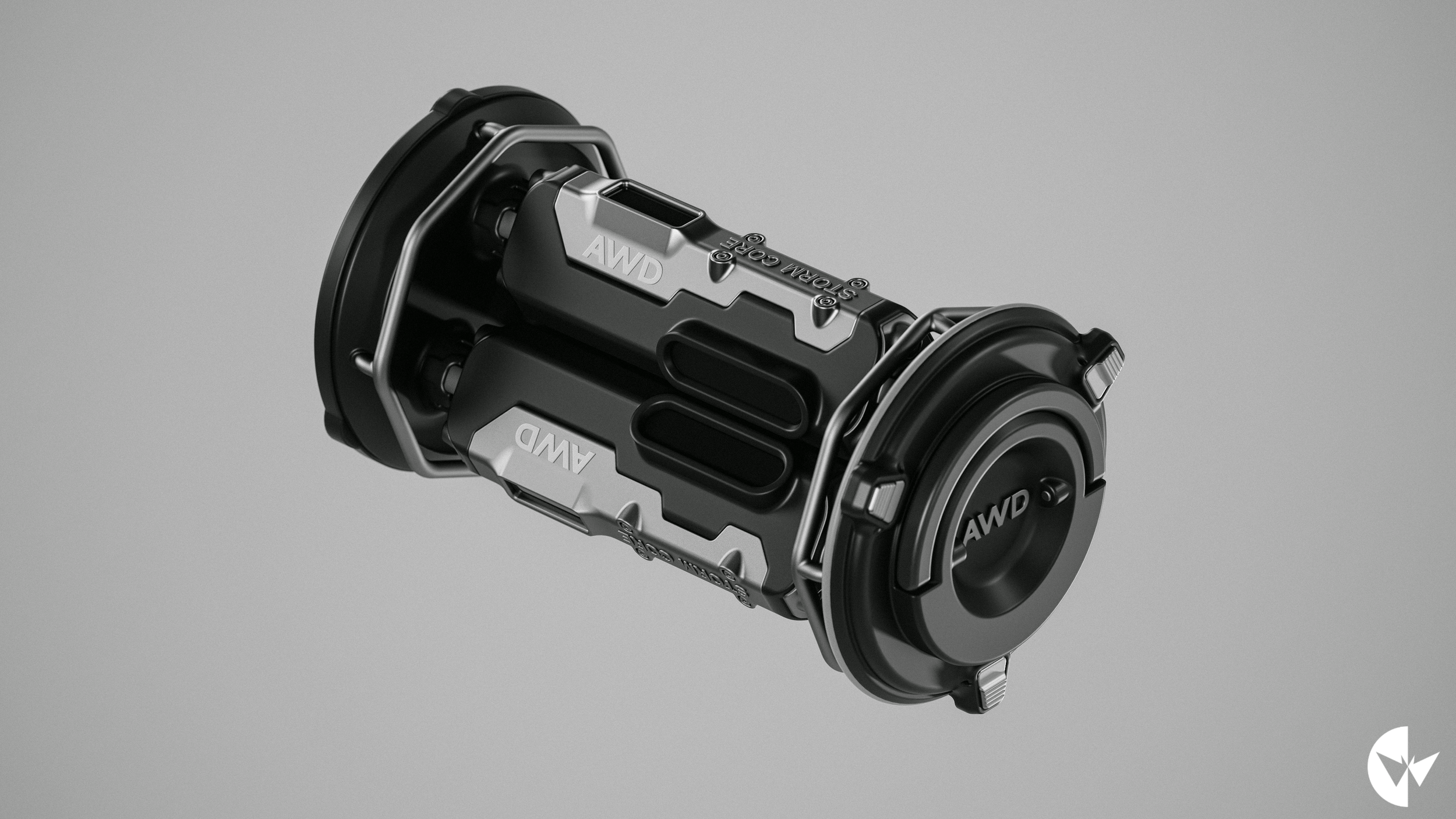
Storm Cores, used to reload and charge up the Windlaser
The Windlaser operates on a limited capacity, as it only holds three full-power shots before requiring a lengthy reload. Reloading is handled through a storm core magazine system. Each magazine is assembled from three storm core batteries, a resource intended to be rare and difficult to acquire. This constraint forces deliberate use rather than sustained firing.
Core Design Considerations and process
From a design perspective, the silhouette of the Windlaser was a priority. The Windlaser has a strong, recognisable shape, with a forward-weighted profile that reflects the directional force it produces, and its distinctive when another player is holding it (even from quite far away, you know someone means business). The design aligns with the established Storm Arms manufacturer identity, maintaining consistency with existing equipment while pushing into more experimental territory.
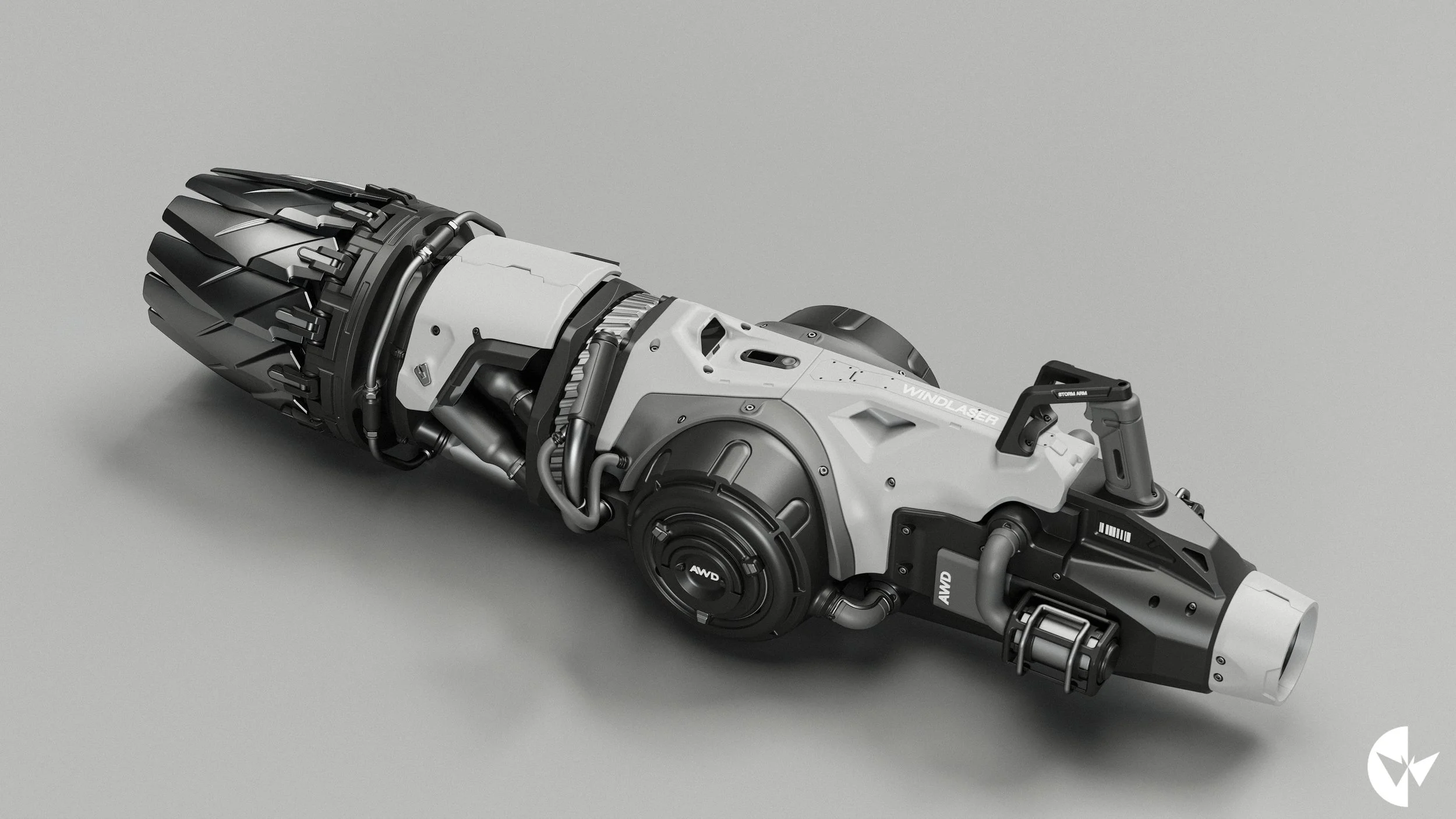
I wanted the form of the Windlaser to be inspired from real-world industrial machinery. Visible cooling pipes, exposed fuel systems, and reinforced grip positions all serve functional and visual purposes. These elements suggest heat management, energy transfer, and handling requirements without needing explicit explanation.
The development process began with a blockout phase focused on shape and proportion. This stage involved multiple iterations to refine the silhouette and ensure clarity from a first-person perspective. Once I had the structure down, the detail was layered in to support both function and visual cohesion. It took a few tries, but eventually the weapon felt right - a mixture of lethality, wildly experimental and rare to obtain.
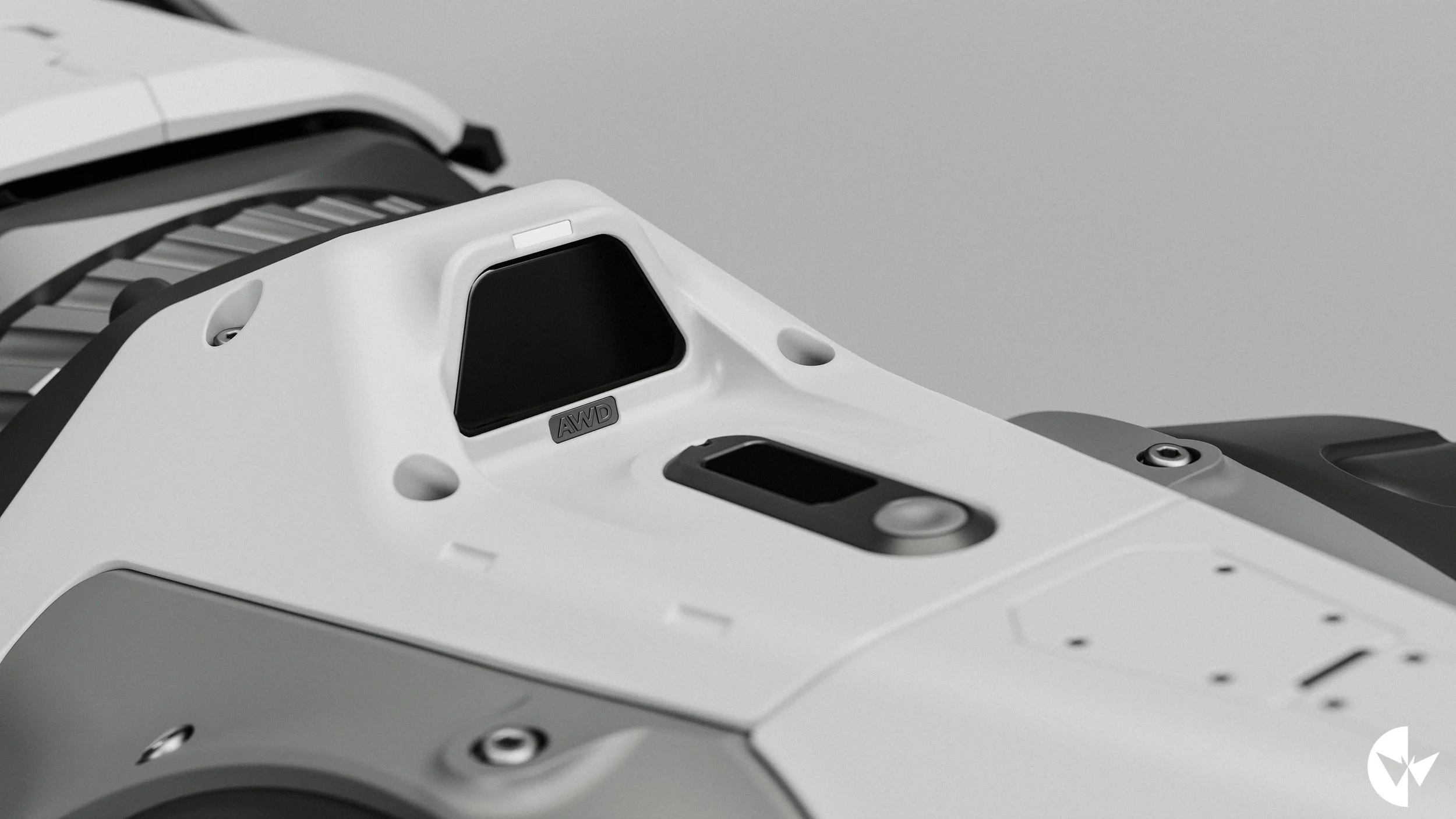
Additional elements such as integrated screens provide real-time feedback (something we’ll be looking to implement on many of the other weapons in the game!) These displays show temperature, charge level, and battery capacity, giving players immediate access to critical information without breaking flow. The goal throughout was to ensure that every component, visual or mechanical, reinforces how the weapon behaves.