Nano Flora Architect - Alpha Removal Tool
Hey all, Damo here (Lead Artist at Chaotic Works).
Over the last few weeks I’ve been working on a side project called Nano Flora Architect, and it’s finally at a stage where I can start showcasing bits of it. Essentially, what I’ve built is a tool that fixes the painful foliage overdraw problem when you bring older assets into Unreal Engine 5.
Honestly speaking, I’m not actually a Software Engineer by trade. I just like to stay active as a dev, and enjoy piecing together workflows and tools using AI whenever I get to a pipeline bottleneck or I see an opportunity for efficiency. Foliage overdraw was a huge one for me, so I built this to solve it.
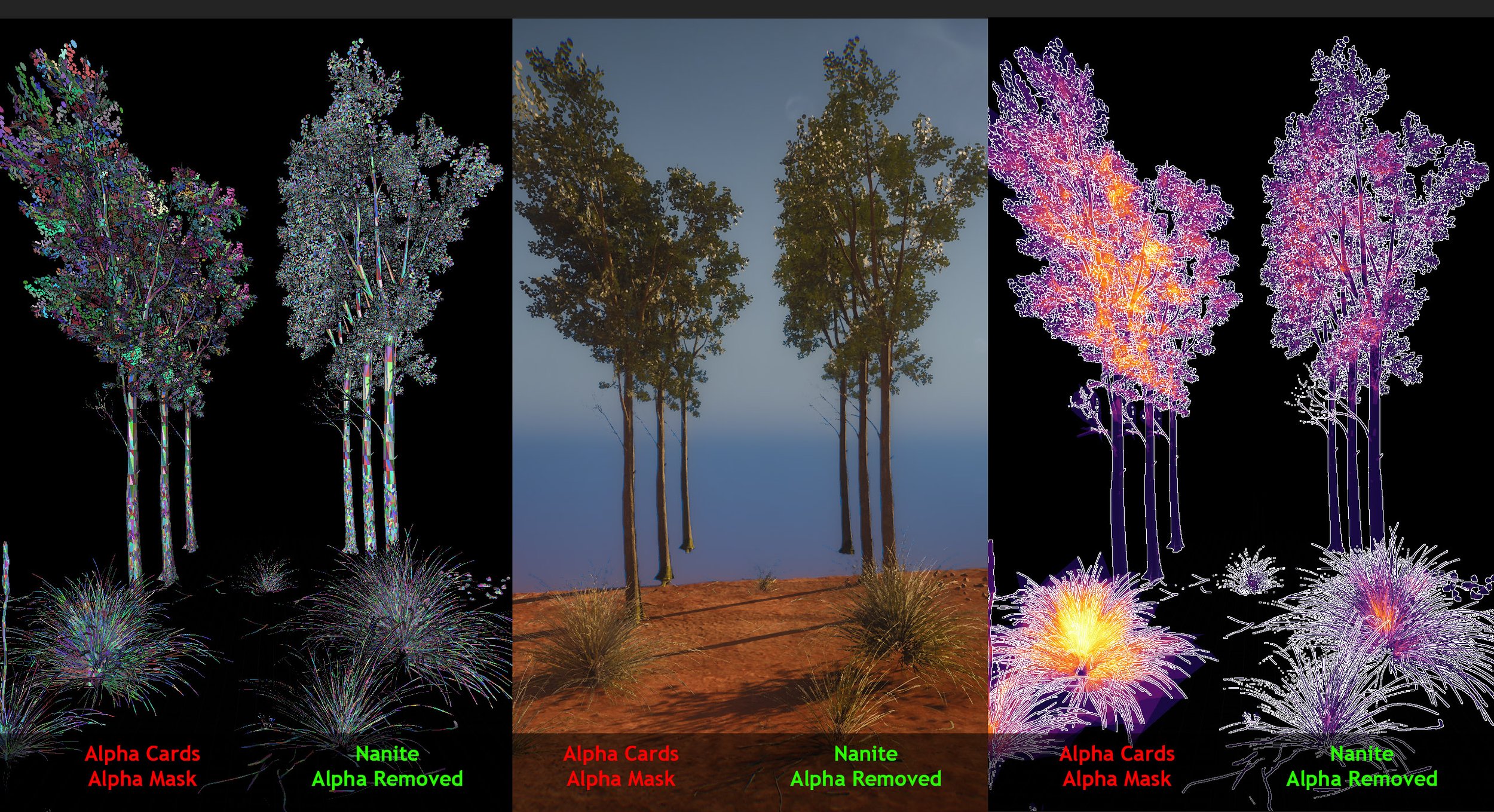
So, why did I build this? UE5’s Nanite thrives on dense micro-polygon geometry but really suffers on overlapping transparent pixels (overdraw). If you have a massive library of older trees and bushes built using standard low-poly quad "alpha cards," dropping them into Nanite will really drop your performance.
I got tired of manually cutting out leaf shapes in 3D software just to get a half decent performance, so I built something that could do it automatically (even giant batches of trees) all at once.
Here’s what it actually does: Nano Flora Architect is a dedicated pipeline tool that takes standard legacy foliage (.FBX) and its textures, mathematically traces the alpha channels, and generates tightly shrinkwrapped, high-performance geometry that Nanite actually likes.
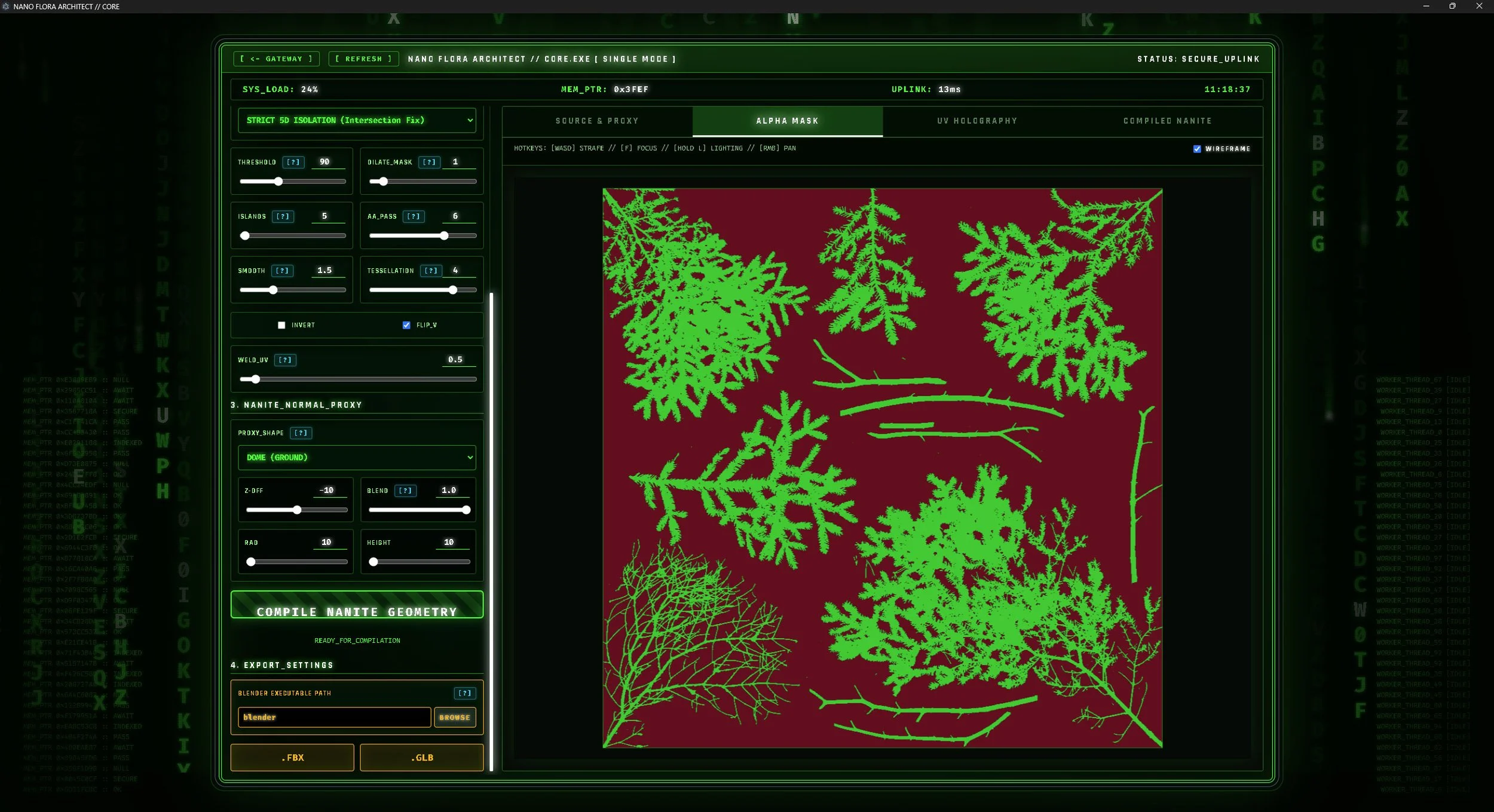
It completely removes the transparent empty space from your leaf cards and replaces them with clean polygons, converting overdraw into raw geometry.
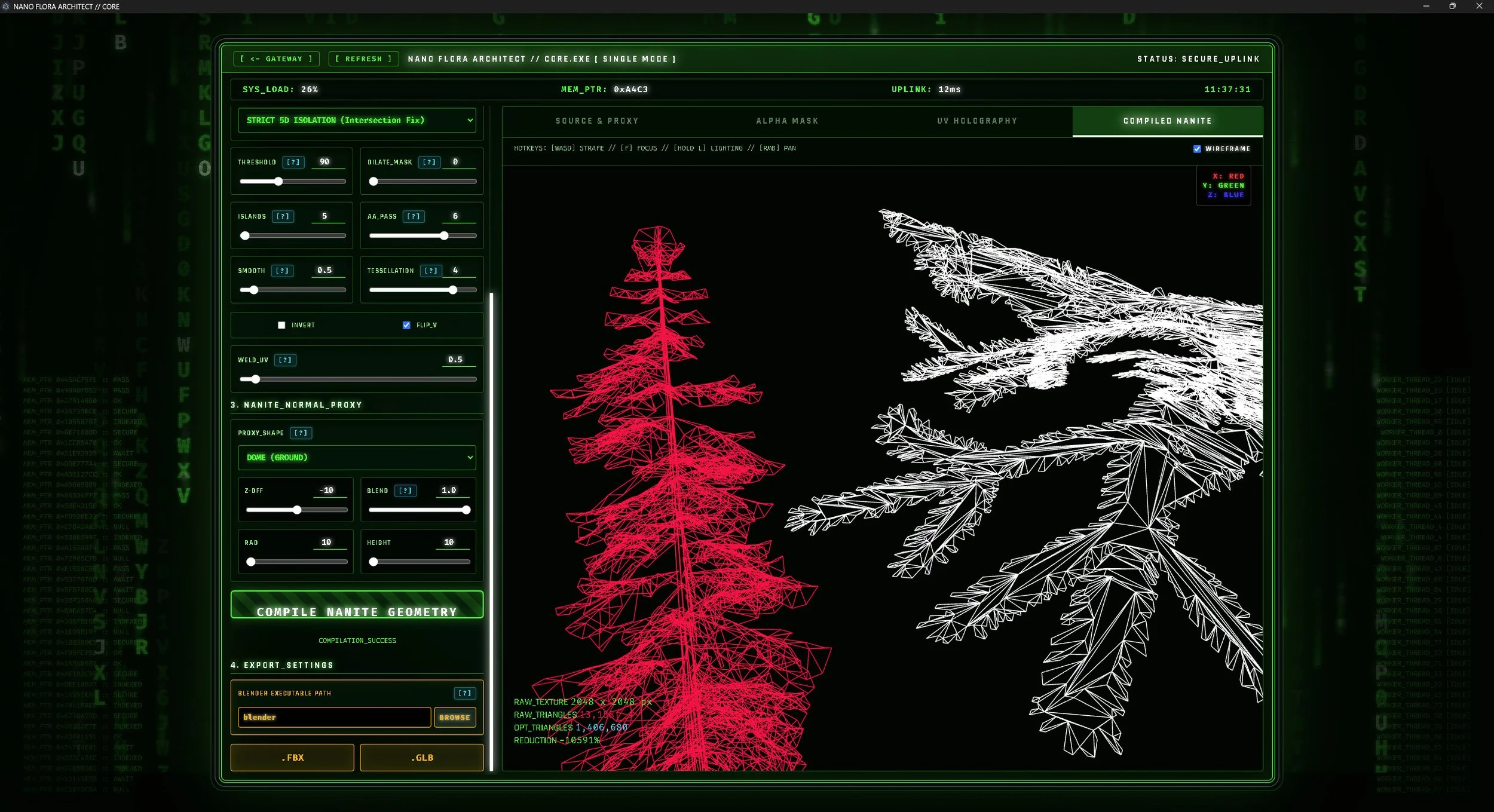
It’s built with a custom JavaScript/WebGL engine running in a local Electron app, and it does a few specific things to make the assets game-ready:
Strict 5D Isolation Tracing: Older trees often have heavily overlapping or crushed UVs to save texture space. The engine groups geometry by 3D space (X, Y, Z) and 2D texture space (U, V) so it can perfectly cut out stacked leaf cards without tearing the mesh apart.
The "Orphan Rescue" Protocol: One of the hardest parts to figure out for sure. The engine has custom failsafes (like Centroid Checking and Clamp-to-Edge wrapping) to ensure that microscopic, razor-thin stems and out-of-bounds UV twigs are mathematically preserved and not accidentally deleted during the cutting process.
Nanite Normal Proxy: Because we are chopping flat cards into complex shapes, the default lighting can get a bit chaotic. The tool allows you to project smooth proxy normals (Spherical for canopies, Cylindrical for trunks) directly into the vertices for perfect foliage shading in-engine.
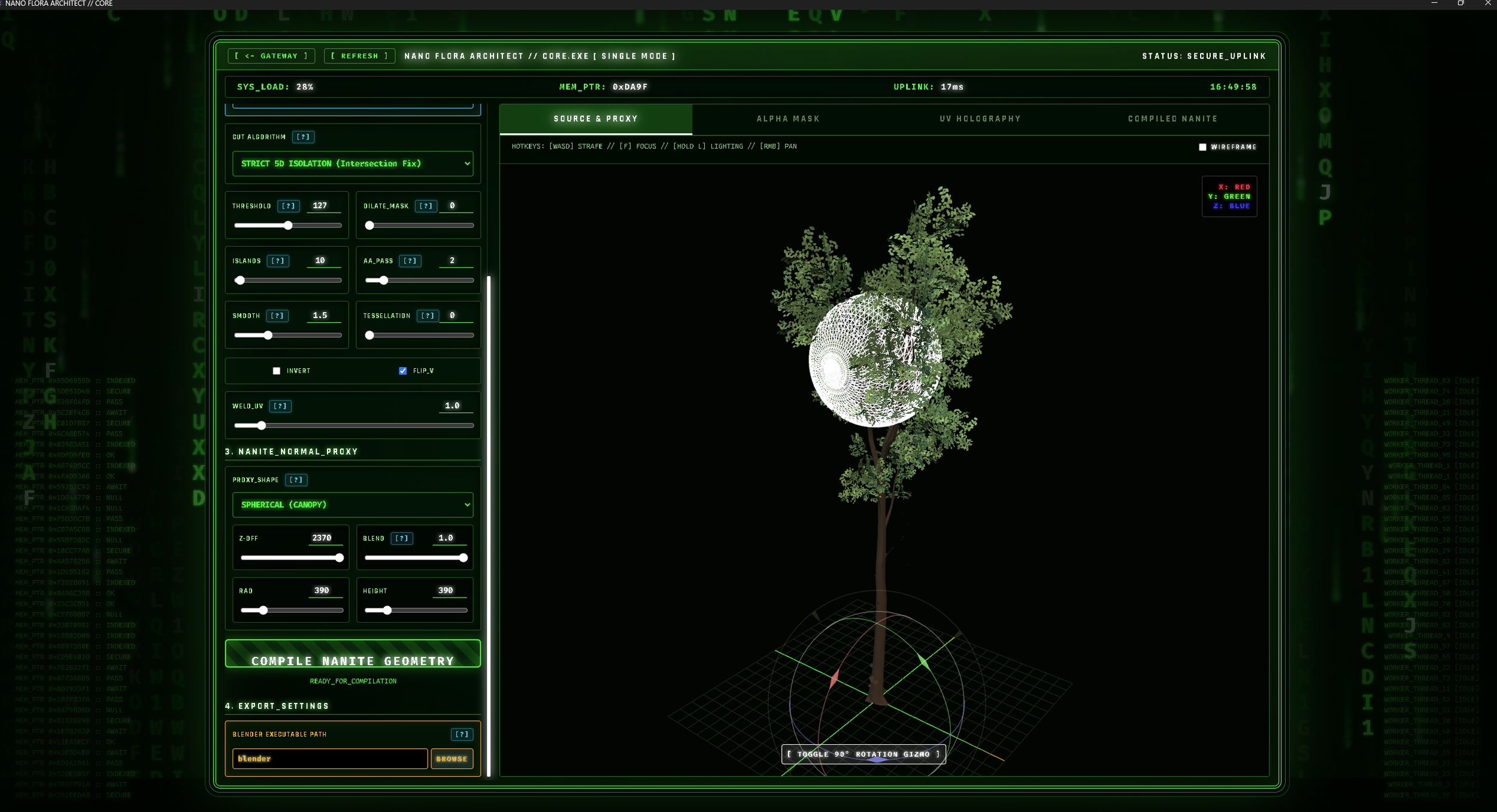
Headless Blender Export: When you hit compile, it boots up a headless instance of Blender in the background to seamlessly convert the WebGL buffers into a perfectly formatted, Unreal-ready Z-up .FBX file.
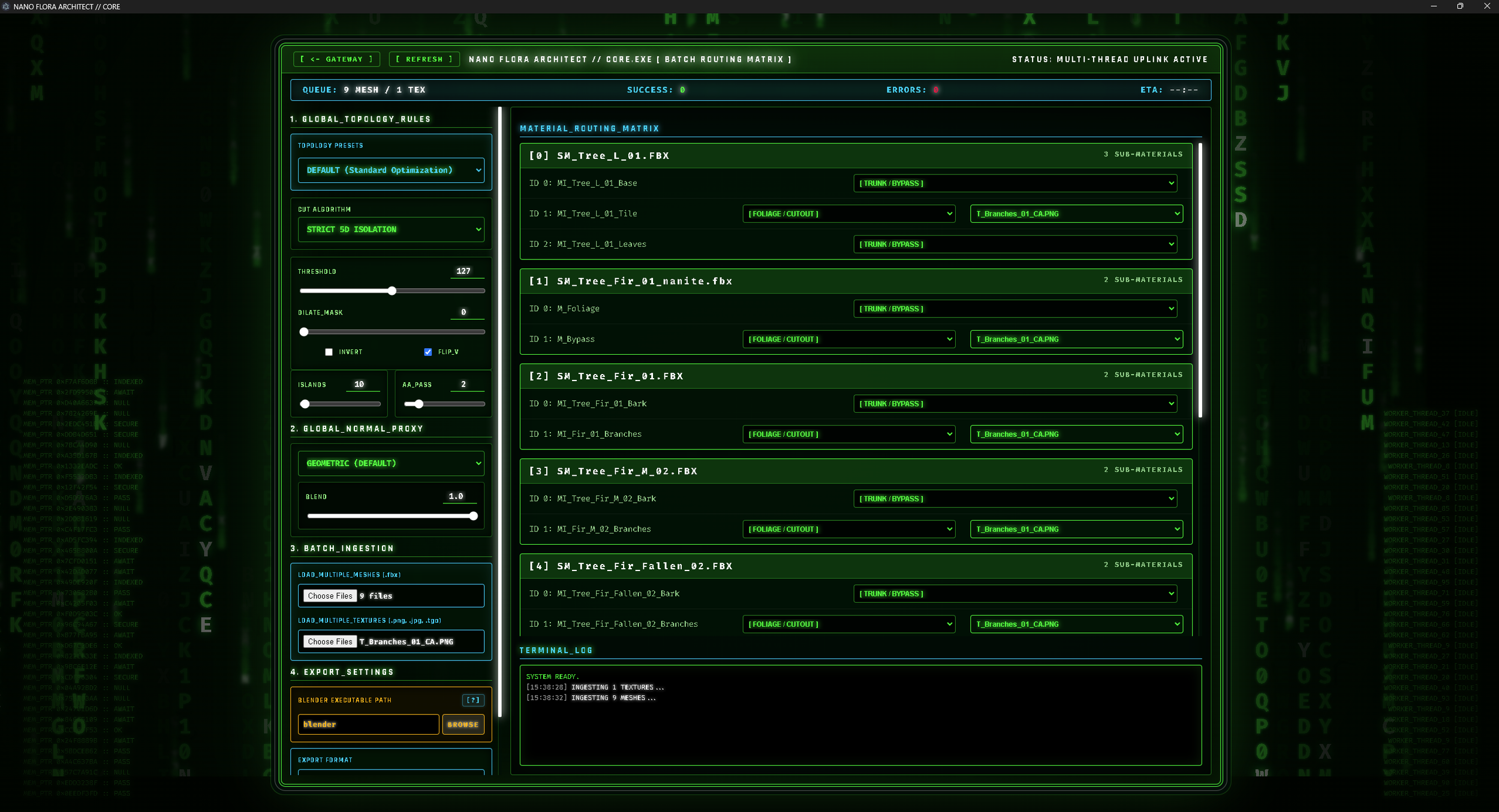
I even built in a Multi-Node Batch Matrix so you can throw an entire folder of meshes and textures at it, assign the routing rules, and let it optimise a whole forest while you go grab a coffee.
I'm so hyped on how this came together. Curious what other environment or tech art people think - would something like this be useful in your pipeline?